
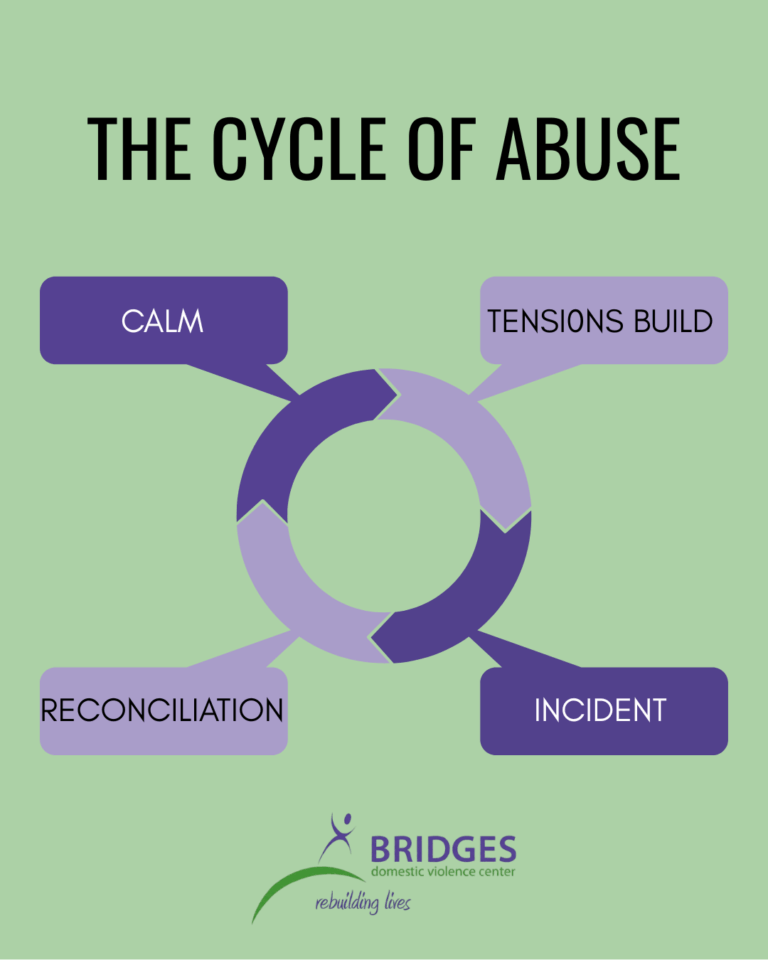
A common misconception about domestic violence is that it is a single moment of harm. However, for most survivors, it’s not just one moment: it’s a pattern. A loop. A cycle that begins unexpectedly and eventually becomes the new normal. This cycle is confusing, oppressive, and leaves little room for hope of escape- unless you know the stages and are able to break free.
Survivors may be asking themselves, “Why does this keep happening?” or “Why can’t I just leave?” The truth is: abuse is complex, and breaking the cycle is incredibly courageous work.
The Cycle Of Abuse: Tension
The cycle usually begins quietly and builds without much fanfare. Maybe your partner gets irritated more easily. Maybe they start making comments that sting but are brushed off as jokes. Maybe you start planning your words carefully, or moving more gently around the house so you don’t “set them off.”
Many survivors describe this phase as living with a knot in their stomach, a constant sense of pressure. You might not call it abuse yet- just stress. Just a bad week, just their temper, just a rough patch. But you shouldn’t have to walk on eggshells around someone you love. You shouldn’t have to work harder daily to keep the peace.
The Cycle Of Abuse: Incident
However, the tension has to break at some point. Sometimes it’s yelling, slamming doors, insults, or threats. Sometimes it’s control: demanding your passwords, questioning your time, cutting you off from friends or family. Sometimes it’s outright physical harm. No matter what form the tension takes when it breaks, it is abuse and it is not ok.
These moments leave survivors feeling shaken, afraid, ashamed, or frozen. The most important thing to remember if you find yourself in an abusive situation is to remember that it is NOT your fault. You deserve safety and love.
The Cycle of Abuse: Reconciliation
Almost every survivor describes the same thing afterward: a wave of apologies, promises, and tenderness.
“It will never happen again.”
“I was stressed.”
“If you didn’t say that, I wouldn’t have reacted.”
This can feel like relief at first. Like the person you fell in love with is back, and they just made a mistake. This is accompanied by the gaslighting that may make you question your experience and perception of what actually happened. These moments of reconciliation seem so sweet and euphoric- but you shouldn’t have to cling to them so tightly.
The Cycle Of Abuse: Calm
After reconciliation, the calm arrives. Days or weeks where everything feels okay. Where you think, “maybe we’re finally past this.” Just a blip in time.
This phase can feel peaceful, even happy. But it’s also what makes the cycle so hard to recognize: because nothing about it looks like abuse. Until the tension starts to build again and the cycle restarts. When you are living inside of it, the cycle is hard to recognize and break free from.
Why Leaving Isn’t Simple Or Safe
People outside the relationship often say, “Just leave.” But survivors know it’s not that easy and that leaving can be the most dangerous moment. Leaving brings up all kinds of questions, such as:
- Where will I go?
- What about my kids?
- What if they find me?
- How will I support myself?
- What if I’m wrong, and things really do get better?
Abusers create the environments that make leaving feel impossible, and contort the cycle of abuse so it seems unbreakable. They create conditions of isolation, financial dependence, fear, manipulation, and dangle a carrot of hope far, far away so that you never leave.
Breaking the Cycle Starts with One Step: Reaching Out
You don’t have to have a plan. You don’t have to know what comes next. You just have to reach out. At Bridges Domestic Violence Center, we meet you exactly where you are. Whether you’re still in the relationship, recently left, or supporting someone you love, we can help you:
- Talk through what’s happening
- Create a safety plan
- Find shelter if needed
- Navigate legal options
- Access counseling and support
- Rebuild your life on your timeline
You are not alone, and you have options. Breaking the cycle is possible, but no one should have to do it alone. If you or someone you care about is experiencing domestic violence, Bridges Domestic Violence Center is here.
Call our 24-hour crisis line: 615.599.5777
Learn more or get help: bridgesdvc.org